Kimi K3 gives businesses another automation option
AWS says its latest model option can cut the cost of reusing documents. Test the savings alongside accuracy and where your business data travels.
AWS has announced that Moonshot AI’s Kimi K3 is available on Amazon Bedrock, its platform for building AI applications and agents. For a business considering document-heavy automation, the announcement offers another model to evaluate. It does not establish that switching will make your existing workflow cheaper or more accurate.
In its launch article, AWS describes a model that can work with documents and images and hold a large amount of material in context. AWS reports a one-million-token context window, meaning the amount of information available to the model during a request. That capacity is a reason to test longer documents, rather than evidence that every answer will be correct.
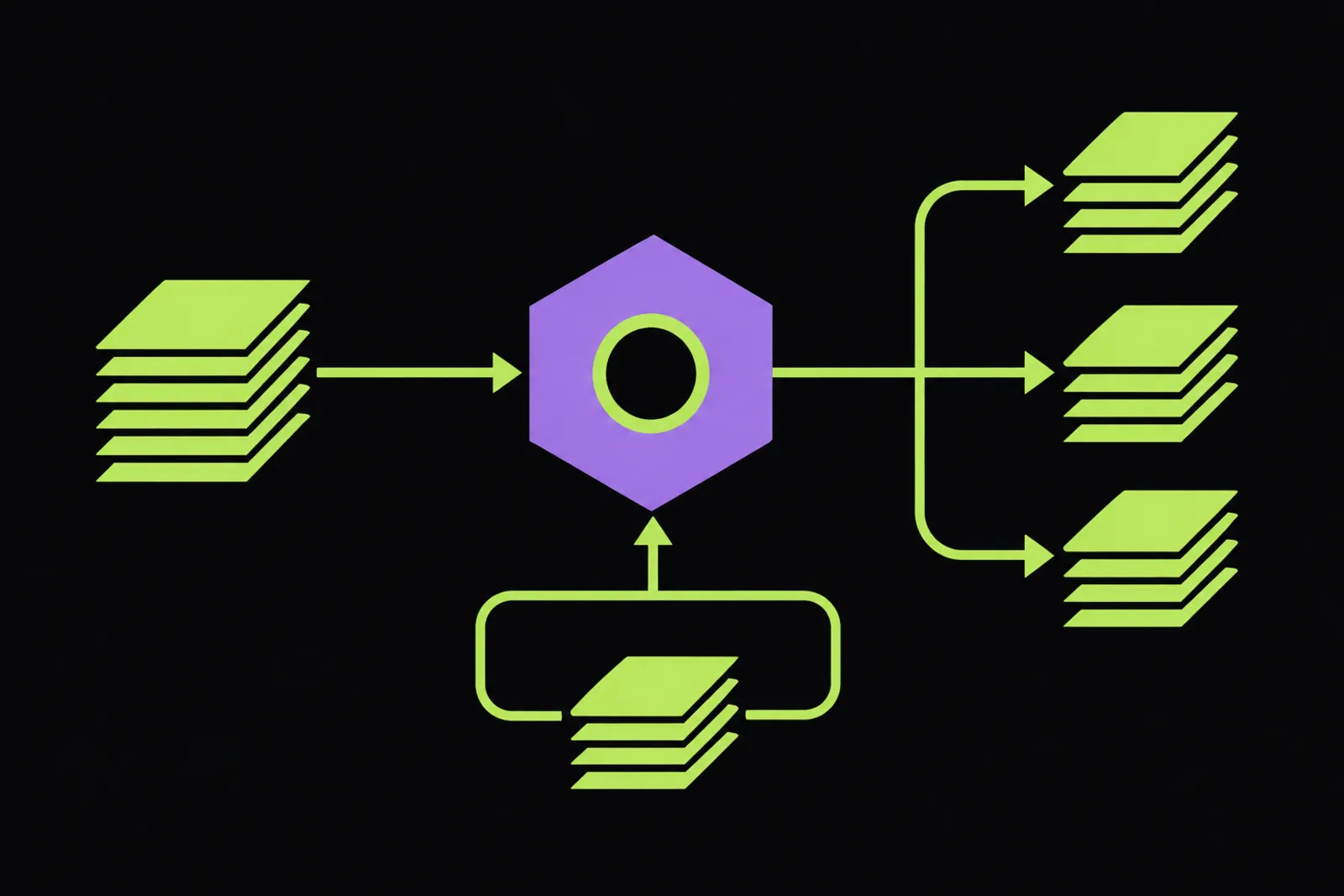
The feature most relevant to the editor’s cost question is explicit prompt caching. AWS says Kimi K3 is the first open-weight model on Bedrock to support it. In plain terms, you identify material that will be reused so subsequent matching requests can receive a discount on that part of the input.
Repeated reference documents are worth a closer look
For a business of five to fifty people, consider a proposed workflow that repeatedly consults the same procedure manual, service information or reference documents. Those are useful examples to put in a trial because AWS specifically identifies stable instructions and reference documents as candidates for caching.
There is a qualification to the savings claim. According to AWS, writing material into the cache costs more initially. The material then remains cached for at least 30 minutes, and subsequent requests that match it receive discounted input pricing. AWS also says those matching requests can return faster. The practical question is whether your workflow reuses enough material to justify that initial cost.
Data handling deserves equal attention. AWS says inference data stays within its data boundary, is not shared with the model provider and is not used to train the underlying model. It also says inference requests have zero data retention and that AWS operators cannot access prompts or completions during inference.
However, the AWS boundary does not mean Australia-only processing. AWS says the global option can route requests to supported commercial AWS Regions worldwide. The announcement also describes a US option that keeps processing within the US. It does not establish an Australia-only option, so ask your provider to confirm the processing location before using business records.
Ask for a comparison using one real workflow
My recommendation is a bounded trial, with a clear decision at the end. Give your automation provider one document task and ask for a comparison against your current approach. Keep the questions practical:
- Accuracy: Check answers against the source documents. Include missing information and exceptions, and record where a person must correct the result.
- Total cost: Include the initial cache charge and subsequent requests. Ask whether the result depends on documents being reused frequently.
- Data handling: Confirm the routing option and which records are appropriate for the trial before supplying them.
AWS says its global routing option costs approximately 10% less than a geographic option. That is a comparison between routing options, not a promised reduction in your automation bill. Treat Kimi K3 as another candidate: adopt it only if the trial supports the price, accuracy and data handling your business needs.
Questions
Will Kimi K3 make my document automation cheaper?
AWS says explicit prompt caching can reduce input costs when requests reuse matching material. However, writing that material into the cache costs more initially. The announcement does not establish savings for your workflow. Its approximately 10% price difference compares global routing with geographic routing, rather than Kimi K3 with your existing automation.
Will my documents stay in Australia?
The announcement does not establish an Australia-only processing option. AWS says the global option routes requests to supported commercial AWS Regions worldwide, while the US geographic option keeps processing within the US. AWS separately says data remains within its data boundary. That assurance should not be read as a promise of Australian processing.
Will Moonshot AI use my business documents to train its model?
AWS says data processed through Kimi K3 on Amazon Bedrock is not shared with the model provider and is not used to train the underlying model. It also says zero data retention is always enabled for inference requests, and zero operator access prevents AWS operators from accessing prompts and completions during inference.
https://aismith.com.au/blog/kimi-k3-gives-businesses-another-automation-option